
Choosing the right materials for an outdoor kitchen is one of the most important decisions made during the design process. With so many options on the market, it’s easy to feel overwhelmed, especially when budget-friendly choices like polyvinyl chloride (PVC) outdoor kitchen cabinets promise durability at a fraction of the cost of premium alternatives.
But what looks like savings today can turn into costly replacements down the road. This guide honestly evaluates the pros and cons of PVC kitchen cabinets. It also reveals a superior polymer alternative, high-density polyethylene (HDPE), that delivers long-term value, lasting beauty and true peace of mind for outdoor kitchen investments.
What Are PVC Outdoor Cabinets?
PVC, or polyvinyl chloride, is a type of synthetic polymer commonly used in construction and manufacturing. You have likely encountered it in plumbing pipes, vinyl siding and window frames. PVC material for kitchen cabinets offers a lightweight, moldable alternative to traditional materials like wood or metal.
The material is created through a chemical process that transforms raw compounds into a durable, water-resistant polymer. This versatility has made it one of the most widely used materials in construction and consumer products. For outdoor kitchens, manufacturers mold PVC into cabinet boxes, doors and drawer fronts designed to resist the elements. The appeal lies in its moldability and initial resistance to water damage, making it a practical choice for spaces exposed to rain and humidity.
Advantages of PVC Cabinets
Before diving into the limitations, it’s important to understand why PVC cabinets for outdoor kitchens appeal to designers, builders and homeowners alike.
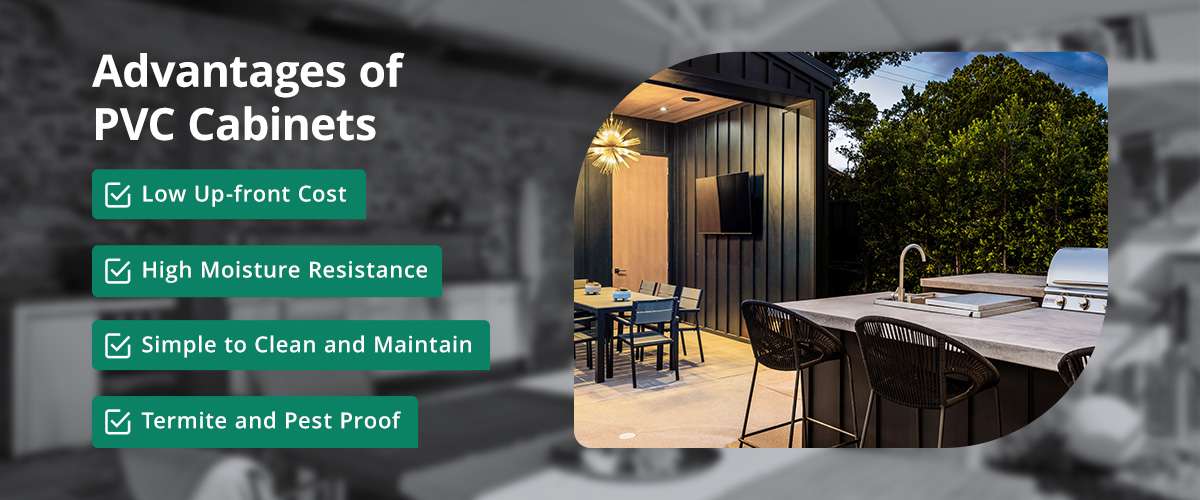
Low Up-front Cost
This is the primary reason most people consider PVC. The material is widely available and inexpensive to manufacture, which translates to significant short-term savings compared to premium materials like stainless steel or engineered polymers. PVC is incredibly economical, making it accessible for projects working within tight budget constraints.
High Moisture Resistance
Because PVC is a solid, nonporous polymer, it’s completely waterproof. Rain, humidity and splashes won’t cause the material to rot, delaminate or swell the way wood cabinets would. This inherent moisture resistance makes outdoor PVC cabinets functional in wet environments without requiring additional sealants or protective coatings.
Simple to Clean and Maintain
The nonporous surface resists dirt and grime buildup, making routine cleaning straightforward. A simple wipe-down with soap and water is typically all one needs. Unlike wood, which requires periodic staining or sealing or metal, which may need rust prevention treatments, PVC requires no ongoing maintenance treatments to maintain its moisture resistance.
Termite and Pest Proof
Since the material contains no organic wood fibers, it’s completely immune to termites and other wood-boring pests. This is a genuine advantage in regions where insect damage is a common concern for outdoor structures.
Key Drawbacks of PVC Outdoor Cabinets
While the low up-front cost is appealing, it comes with significant long-term trade-offs that can affect both durability and appearance. Understanding the disadvantages of PVC kitchen cabinets helps make a more informed decision about whether the initial savings justify the compromises.
Susceptibility to Heat Warping and Damage
PVC can soften, warp or deform when exposed to high heat. Placement near grills becomes a serious concern because the material has a relatively low heat tolerance compared to other outdoor cabinet options. Direct exposure to heat sources or even intense reflected sunlight causes permanent shape distortion that affects both function and appearance.
Prone to Fading and Discoloration From UV Exposure
Constant sun exposure breaks down the polymer structure. The original color fades, dulls or takes on a chalky appearance over time. Unlike materials engineered with UV stabilizers, standard PVC degradation from sunlight is progressive and irreversible. The cabinets will look weathered and worn within just a few years of outdoor exposure.
Risk of Cracking and Becoming Brittle
Over time, UV degradation makes the polymer brittle. Impacts or even temperature fluctuations can then cause cracks more easily. What starts as a durable material gradually loses its flexibility and impact resistance, which leaves older PVC cabinets increasingly fragile and prone to structural failure from normal use.
Limited Repairability and Aesthetic Appeal
Unlike wood, scratches and dings on PVC are permanent and cannot be sanded or refinished. The material also tends to look distinctly like molded polymer rather than offering the high-end appeal of premium outdoor materials. For those investing in beautiful outdoor living spaces, this aesthetic limitation can undermine the overall design vision.
HDPE as an Alternative to PVC
HDPE, or high-density polyethylene, is a modern engineered polymer designed to solve the exact problems inherent in PVC. When comparing PVC vs. HDPE for outdoor kitchens, the differences become clear. HDPE offers a higher strength-to-density ratio, superior corrosion resistance and is made from recycled materials, making it both a performance upgrade and an environmentally responsible choice.
It is best to choose HDPE weatherproof cabinets engineered to withstand the challenges of outdoor environments. These cabinets feature solid core color throughout, so even scratches won’t reveal a different shade underneath. The nonporous surface is approved by the Food and Drug Administration (FDA) for food contact, an important consideration for outdoor kitchen applications.
Durability and Lifespan
While PVC becomes brittle over time, HDPE is a more robust polymer that resists impacts and is engineered for a much longer lifespan outdoors. The material maintains its structural integrity through years of exposure to sun, rain and temperature fluctuations. This means an HPDE-style cabinet continues to perform and look great season after season, without the gradual degradation that plagues PVC.
Heat and UV Resistance
HDPE has greater heat tolerance than PVC and contains UV inhibitors to help keep the color vibrant and reduce fading, even in direct sunlight. These UV stabilizers are integrated throughout the material during manufacturing, not just applied as a surface coating, which means the protection lasts for the entire life of the cabinet.
Cost vs Long-Term Value
The up-front cost of HDPE is higher than PVC, but it’s a smarter investment that pays for itself by eliminating the need for replacement. So, are PVC kitchen cabinets good? When you factor in the longevity, performance and aesthetic retention, HDPE delivers superior value over the lifespan of an outdoor kitchen.
Design and Aesthetic Options
HDPE comes in a wide variety of high-end finishes, going far beyond the basic appearance of molded polymer. From realistic woodgrains to contemporary solids, look for options that bring natural beauty to outdoor spaces without the maintenance demands of real wood.
Get Quality Outdoor Kitchen Cabinets From Open Air Outdoor Cabinetry
The smartest investments deliver value that lasts. Open Air Outdoor Cabinetry specializes in premium HDPE weatherproof cabinets engineered to withstand sun, heat and rain without fading, warping or cracking. We offer customizable sizes, colors, styles and more.
Ready to see what’s possible? Find a dealer near you to start designing a premium outdoor living space. If you are interested in becoming one of our outdoor cabinet dealers, submit an application today to get started.
Leave A Comment